EU rules on mercury and metal-halide lamps: what microscopy labs need to know
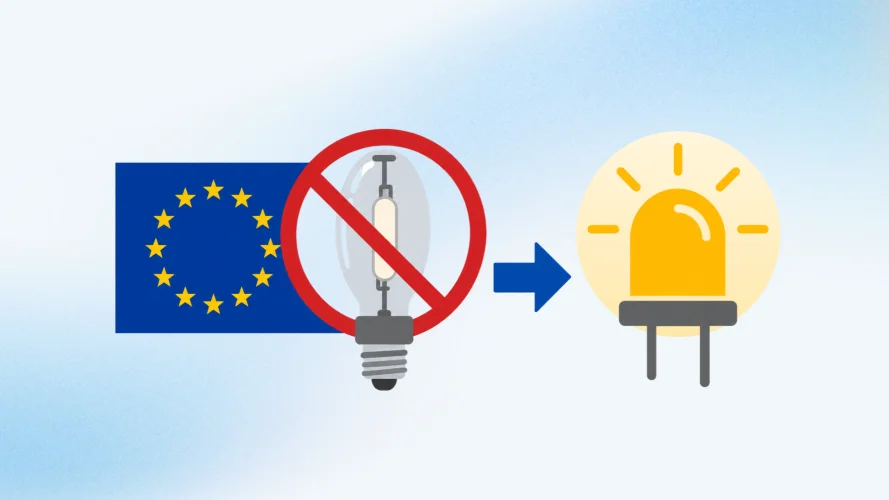
EU regulations on mercury-containing lamps are changing, raising questions about replacement bulbs and long-term microscope maintenance. Find out what the February 2027 exemption deadline means, how it affects existing microscopy systems, and why now is a good time to consider switching to LED illumination.
expert insights
Blog Post
EU rules on mercury and metal-halide lamps: what microscopy labs need to know
11 Nov, 2026
Information reviewed on 11 November 2026
Mercury arc and metal-halide lamps remain in use in many microscopy laboratories. For facility managers, EU restrictions raise practical questions about continued operation, replacement bulbs, and investment planning. The situation depends on the lamp, its application, the relevant regulatory exemption, and its renewal procedure. This article explains the provisions most relevant to laboratory planning, with links to legislation and public guidance.
Let’s look at the details.
What RoHS regulates
The RoHS Directive 2011/65/EU restricts certain hazardous substances in electrical and electronic equipment. Mercury is one of them. The European Commission’s RoHS overview explains the environmental purpose and provides access to the consolidated legislation, amendments and guidance.
Article 4(1) addresses equipment placed on the market while Article 4(6) provides for applications exempted in Annexes III and IV.
Which lamp exemptions apply?
Two Annex III entries are particularly relevant to discussions about microscopy illumination. Metal halide lamps - e.g. X-Cite 120PC Q, Intensilight C-HGFI, U-HGLGPS - in the original Annex III 4(e), and mercury short arch lamps with UV emission - like the famous HBO series – in a newer Annex III amendment at entry 4(f)-IV Commission Delegated Directive (EU) 2022/279. The stated deadline of selling these products on EU market is 24 February 2027. This would originally mean that you can’t buy these lamps after February next year BUT…
Why the regulatory timeline remains uncertain
RoHS exemptions are time-limited but they can be renewed. Under Article 5(5), a renewal application must be submitted at least 18 months before expiry.
This means that the date printed in Annex III cannot be read independently of the procedural status. A requested extension is not an approved extension, but a pending timely request also cannot be ignored. Neither a universal February 2027 cutoff nor a guaranteed extension to a particular year follows from the date alone.
LightingEurope’s June 2026 statement on RoHS lamp exemptions, discusses the assessment of mercury-lamp renewal requests. On page 2, it expressly notes that the request for exemption 4(e), concerning metal halide lamps, still needs assessment. The published 2026 assessment consultation lists several other mercury-lamp renewals, including 4(f)-IV.
Note that LightingEurope represents industry; its reporting on expected regulatory timeline might be biased.
Existing microscopes and replacement bulbs
The RoHS provisions discussed here do not impose a general requirement to stop operating an existing microscope when a lamp exemption expires. Continued operation remains possible under the institution’s normal equipment safety and operating procedures.
Replacement parts deserve separate attention. Article 4(4)(f) of Directive 2011/65/EU provides an exception for specified spare parts (like bulbs) that were placed on the market before their specific exemption expired.
This may be relevant to a replacement lamp, but it is not blanket permission for any bulb sold for any instrument. If the supplier does not proactively inform the user about the applicable route for the part and equipment, it is wise to start a discussion. Suppliers should be able to react with a written response that identifies the part number, legal basis and any conditions.
A measured approach to facility planning
While an approaching regulatory deadline alone does not imply harder delivery conditions, price raise or availability bottleneck, still, a sudden surge in market demand is not unimaginable. Therefor it is advisable to get prepared.
For a facility manager, the most useful response is a documented review within normal equipment planning. An inventory can record the illuminator model, replacement lamp code, supplier, operating hours and existing compliance documentation. Keeping these details together makes future regulatory updates easier to interpret and quicker to execute a transition plan.
Procurement discussions can then address the actual instrument: whether the lamp remains suitable, which provision supports replacement supply, and whether a proposed alternative meets the laboratory’s requirements. An LED or other mercury-free upgrade can be evaluated on its own merits.
Continuing with a supported lamp system, testing an alternative or scheduling an upgrade during maintenance may each be reasonable, depending on the application. The decision belongs to the laboratory.
Need support?
We hope these resources help you navigate the transition, from checking exemption and renewal status to documenting replacement eligibility and assessing imaging requirements. If you have questions about your current illumination system or potential alternatives, please contact us.
Latest Articles
Blog Post
11 Nov, 2026
EU rules on mercury and metal-halide lamps: what microscopy labs need to know
EU regulations on mercury-containing lamps are changing, raising questions about replacement bulbs and long-term microscope maintenance. Find out what the February 2027 exemption deadline means, how it affects existing microscopy systems, and why now is a good time to consider switching to LED illumination.

White Paper
01 Oct, 2026
A New Neutrophil Subset Suppresses Immunity Response in CRCLM
Within the tumor microenvironment, tumor-associated neutrophils (TANs) are gaining attention as important regulators of inflammation, immune suppression, and tissue remodeling. Recent studies suggest that specific neutrophil populations can actively support metastatic growth rather than simply responding to it.

News
14 Sept, 2026
TissueGnostics collaborates with Diya Biological Technology in organoid and organ-on-a-chip innovation
TissueGnostics, the trailblazer in Spatial Tissue Cytometry, has entered into a collaborative agreement with Diya Biological Technology Group Co., Ltd., a leading Chinese organ-on-a-chip CDMO and research service platform specialising in microfluidic organ chips, organoid banking and tumour drug-testing services.

